Step 02 — Research
Due diligence is the job.
Everything people imagine about tax sale investing happens in a few minutes at an auction. Everything that determines whether it works happens in the weeks before it, at a desk, with public records.
A cause we support: Rock Against Trafficking.
2.1
A repeatable workflow
- 1. Choose the state, then the county
- Rules are set by state statute and executed by county offices. Pick a jurisdiction you can realistically research, travel to, and understand — not the one with the most exciting numbers.
- 2. Read the current procedures
- Registration requirements, deposit rules, bidding format, payment deadlines and post-sale obligations come from the county holding the sale. Get them from the county, in writing, for this sale.
- 3. Obtain the auction list
- Counties publish lists of parcels going to sale, often through the treasurer, tax collector or an auction platform. The list is your raw material, not your shortlist.
- 4. Translate each parcel
- Turn parcel numbers and legal descriptions into a real place on a map. Confirm that the land exists, has access, and is what you think it is.
- 5. Filter aggressively
- Most parcels on any list are not worth your capital. Expect to research many to find a few. Screening quickly and eliminating honestly is the skill.
- 6. Establish value
- Look at comparable sales, current listings, condition, zoning and use. Assessed value is a tax figure, not a market opinion. Value the property as it is, not as you hope it is.
- 7. Inspect — or have someone you trust inspect
- Drive it, or send a local person you trust: an agent, a contractor, a property manager. Exterior condition, occupancy, debris, neighbors and access tell you things no record will.
- 8. Stack the costs
- Purchase amount, county fees, recording, other liens and assessments, holding costs, insurance, cleanup, repairs, travel, legal work, and the cost of selling. All of it counts.
- 9. Write down the maximum bid
- Before the auction. On paper. The number is derived from value minus costs minus the return you require. At the auction you do not recalculate — you obey it.
2.2
Records tell you one story. The property tells another.
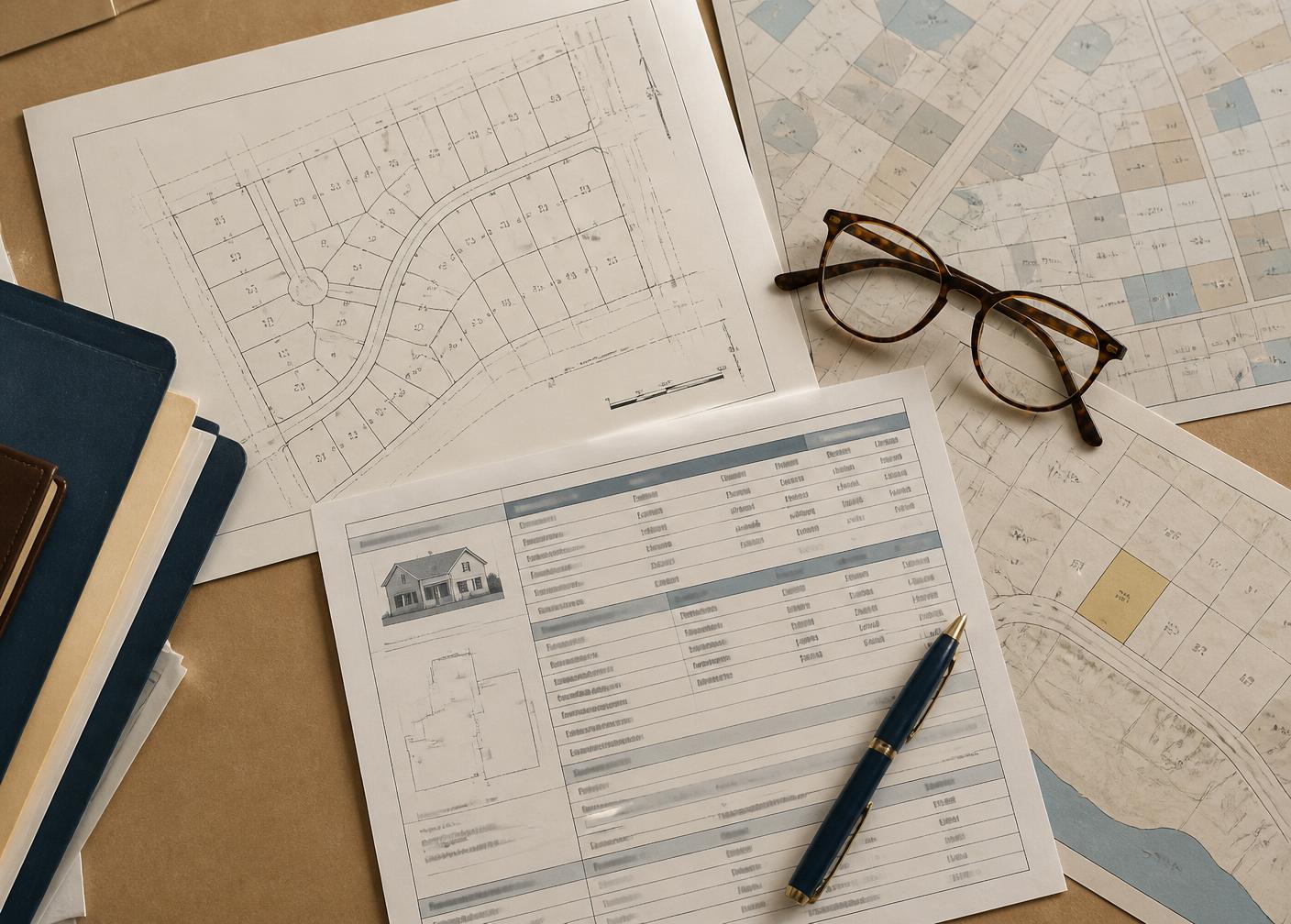
Assessor records, recorded documents, GIS parcel maps and permit history are enormously useful, and they are also incomplete and sometimes wrong. A parcel that looks like a buildable lot online can be a drainage ditch. A house that appears in a three-year-old satellite image can be a burned shell today.
Treat records as a hypothesis and the physical property as the test. If you cannot get eyes on it, that is a reason to pass — not a reason to guess.
2.3
The questions worth answering before you bid
- What exactly is being sold here — a lien, a deed, or something in between?
- Where is this parcel, and can I physically get to it?
- What is on the land, and what condition is it in right now?
- Is anyone living there, and what would that mean for me?
- What else is attached to this property that could survive the sale?
- What is it realistically worth in its current condition?
- What will it cost me from bid to closing to carry to sale?
- How long could my money be committed in the worst reasonable case?
- How, specifically, do I get out of this position?
If a question has no answer, that is the answer.
Next — Step 03
Fund
Your lender may already be in your phone.
Free updates
Get new material as it's published
Did we help? Pay the value forward.
If you found value here and choose not to work with us, consider supporting Rock Against Trafficking.